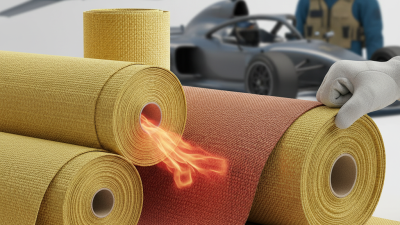
China has become an important sourcing destination for advanced materials, and interest in Aramid Fiber Products continues to grow. Buyers may find yarn, fabric, paper, and finished components for demanding industrial applications. Yet a polished catalog does not prove consistent production quality. Details matter.
This guide introduces China Best Aramid Fiber Products Manufacturers through practical comparison points. It considers product range, material specifications, manufacturing capabilities, quality controls, customization, and communication. Ask for technical data sheets and clear test methods. Check whether stated properties apply to the exact grade and construction you plan to buy. Small differences in weave, coating, or fiber blend can affect performance.
A dependable supplier should explain tolerances, lead times, sample policies, and product limitations in plain terms. Independent audits or recognized management-system certificates can support a review, but they do not replace product-level verification. Request representative samples when appropriate, and compare them with your application requirements. Keep records.
No single manufacturer fits every buyer. Some may specialize in standard fabrics; others may handle narrower specifications or smaller production runs. Treat any shortlist as a starting point, not a guarantee. Supplier information can change, and online descriptions may leave important questions unanswered. A careful inquiry is still necessary. That may feel slow. It is usually worth doing before placing a large order. This guide focuses on evidence buyers can check, rather than broad claims that are difficult to verify.
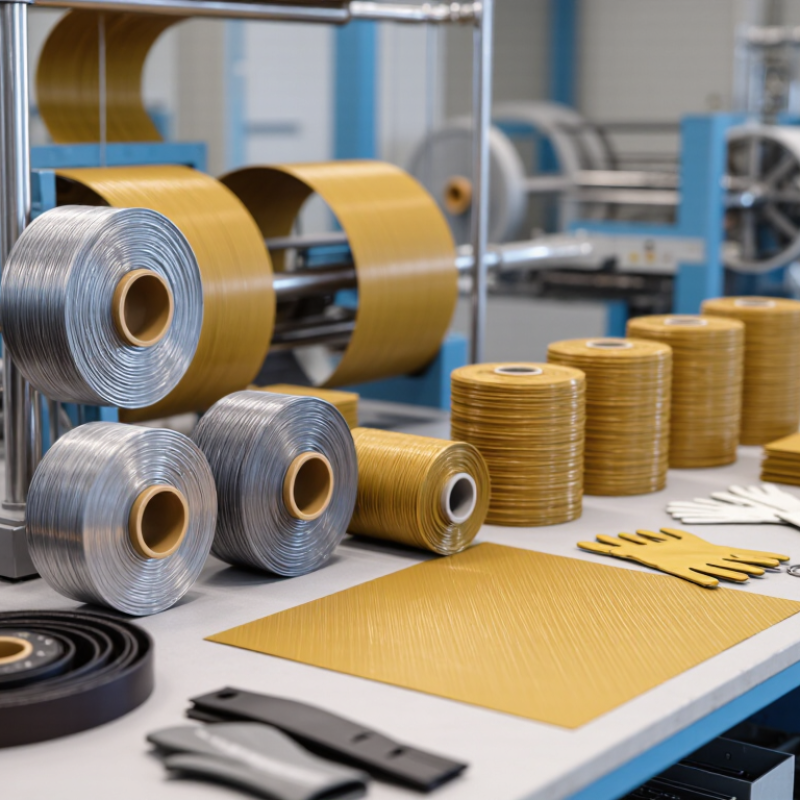
China’s aramid fiber products industry covers more than yarn production. Manufacturers convert fibers into fabrics, sewing thread, paper, felt, and composite reinforcements. These materials serve applications where heat resistance, low weight, or strength matters. A fabric roll may look uniform, yet its weave and finish can affect how it performs in a finished component.
The supply chain includes polymer preparation, spinning, textile processing, and product testing. Both para-aramid and meta-aramid materials are used, but they suit different performance needs. Para-aramid is often selected for strength, while meta-aramid is valued for heat resistance. Protective garments, electrical insulation, filtration media, and friction components are common product categories. Details matter. Fiber type alone does not guarantee suitability; thickness, construction, and operating conditions also shape performance.
China’s industry offers a broad range of formats and production capacities, though specifications and consistency can vary between suppliers and batches. Buyers should review test methods, traceability, and sample performance under realistic conditions. A datasheet rarely tells the whole story. Even a careful review may miss a practical issue, such as stiffness after coating or fabric behavior during repeated flexing. Small pilot runs can reveal those gaps before larger orders.
Aramid fiber products come in several forms, each suited to a different task. Continuous yarn is commonly woven or knitted into fabrics for protective clothing, gloves, and reinforcement layers. The finished fabric can feel light, yet its tight construction helps resist tearing and abrasion. Small details matter: weave density, fiber direction, and fabric weight can change how a garment performs during repeated movement.
Aramid paper is used in electrical insulation and lightweight honeycomb structures, while chopped fibers and pulp can reinforce molded parts or friction materials. Ropes and braided sleeves use yarn where low weight and tensile strength are useful. The right choice depends on the job, not just the fiber name. A fabric for heat exposure may need a different weave from one designed for cut resistance. Aramid is not indestructible; prolonged ultraviolet exposure, moisture, or poor handling can reduce performance. Testing samples under realistic conditions is wise. Catalog descriptions rarely show every trade-off.
Aramid fiber manufacturing begins with carefully controlled polymer chemistry. Producers react aromatic compounds to form a polymer, then dissolve it into a spinning solution. The exact chemistry varies by fiber type. Temperature, concentration, and mixing speed affect consistency, so even small process shifts can change the finished yarn.
The solution passes through tiny spinneret openings and enters a coagulation bath, where continuous filaments form. Washing removes residual solvent, while drawing and heat treatment align polymer chains and improve strength. The filaments are then dried, wound, and checked for thickness, tensile performance, and surface defects. Small details matter. Uneven tension can create weak spots that only become obvious during later weaving or testing.
According to Grand View Research’s 2024 market analysis, the global aramid fiber market was valued at about US$3.79 billion in 2023, with growth projected through 2030. That estimate reflects demand across protective fabrics, ropes, and industrial reinforcement, not manufacturing quality alone. Not perfectly. A high-strength yarn can still perform poorly if moisture, filament damage, or inconsistent finishing is overlooked. Experienced manufacturers therefore track process conditions alongside finished-fiber test results.
When evaluating Chinese aramid-fiber manufacturers, look beyond headline strength figures. Ask for technical data sheets that state fiber type, linear density, tensile strength, modulus, and elongation. Compare results from the same test method, not just similar-looking numbers. MarketsandMarkets estimated the global aramid-fiber market at USD 4.3 billion in 2023 and forecast USD 6.3 billion by 2028. This growth makes clear product specifications and dependable supply important.
Check whether the manufacturer can provide recent test records, batch certificates, and traceability from fiber production to shipment. Review sample results against the data sheet, then repeat tests across more than one batch. Ask how the facility controls moisture, packaging, and storage; a damp or poorly sealed sample can complicate evaluation. Confirm production capacity and lead times with specific figures. Documents help, but they do not replace verification. No checklist catches everything.
Tips: Request a small production sample and its matching test report. Compare several batches, and ask who performed each test. If a specification is unclear, get it clarified in writing before ordering.
China Best Aramid Fiber Products Manufacturers
Quality Standards and Sourcing Considerations
Selecting an aramid-fiber supplier in China calls for more than comparing quoted prices. Grand View Research estimated the global aramid fiber market at USD 4.11 billion in 2023 and projected a 7.4% compound annual growth rate through 2030. Growing demand makes consistent specifications especially important. Ask suppliers to state fiber type, linear density, tensile strength, modulus, and finish in writing. Request a certificate of analysis for each production lot, not just a general product sheet.
For yarn, ASTM D7269 provides test methods for tensile testing of aramid yarns. Compare results only when sampling and test conditions match. A useful incoming check can include a labeled yarn sample, measured linear density, and recorded break strength. Keep batch numbers linked to test records and shipment documents. Traceability matters.
Small differences matter. Surface finish or moisture exposure may affect processing, even when headline strength looks similar. Ask how the supplier controls these variables and handles out-of-specification lots. Verify claims with independent testing when the application is safety-critical. No checklist catches everything. A supplier’s documentation may still leave gaps, so agree on acceptance limits before production and retain reference samples for comparison.
| China Best Aramid Fiber Products Manufacturers - Quality Standards and Sourcing Considerations | ||||
|---|---|---|---|---|
| Product Category | Typical Characteristics | Common Applications | Quality Checks and Relevant Standards | Sourcing Considerations |
| Para-aramid filament yarn | High tensile strength and modulus; low elongation compared with many conventional textile fibers. Properties vary by grade, yarn construction, and test method. | Protective fabrics, ropes, reinforcement, friction materials, and industrial textiles. | Check linear density, tensile strength, elongation, twist, and lot consistency. ASTM D7269 covers tensile testing of aramid yarns; agree on conditioning and acceptance limits before testing. | Request a current technical data sheet, lot-specific test report, traceability details, and samples from the production lot intended for shipment. |
| Meta-aramid staple fiber and spun yarn | Heat- and flame-resistant fiber that does not melt like many thermoplastic fibers. Thermal performance depends on the fiber grade, fabric construction, and exposure conditions. | Protective clothing, filtration media, electrical insulation, and heat-resistant sewing yarns. | Verify fiber identification, fineness, cut length, color, moisture, and relevant flame or heat performance. Use the test method specified for the intended end product. | Confirm whether the offer is staple fiber, spun yarn, or finished fabric; these are different products and their specifications are not interchangeable. |
| Woven or knitted aramid fabric | Performance depends on fiber type, yarn count, weave or knit, fabric mass, finishing, and construction. Fabric-level results should not be inferred from fiber data alone. | Protective apparel, industrial covers, reinforcement layers, and heat-resistant components. | Specify fabric mass, width, weave, color, finish, and dimensional tolerances. ASTM D3776 can be used for fabric mass per unit area; select an appropriate strength or flame test for the product specification. | Approve a construction-specific sample and confirm that bulk production matches the approved sample, including finish and color. |
| Aramid sewing thread | Designed for applications where heat resistance and strength are important. Sewing performance also depends on thread construction, finish, needle, and machine settings. | Protective garments, filters, upholstery, and industrial stitching. | Check thread size, tensile properties, twist, finish, package build, and sewing performance. ASTM D7269 may be relevant for aramid yarn tensile testing; confirm applicability to the supplied thread construction. | Request a machine-sewing trial and confirm package type, net weight, splice policy, and storage conditions. |
| Aramid pulp and chopped fiber | Short or fibrillated forms used as reinforcement or functional additives. Particle or fiber dimensions and dispersion behavior affect processing and finished-part performance. | Friction materials, seals, gaskets, composites, and specialty paper. | Define fiber length or pulp grade, moisture, bulk density, packaging condition, and any application-specific dispersion or contamination limits. | Check compatibility with the buyer’s mixing and forming process; request samples for production-scale trials rather than relying only on laboratory data. |
| Supplier documentation and production control | Reliable sourcing requires consistent specifications, lot traceability, controlled production, and clear change management. | Applicable to yarn, staple fiber, fabric, thread, pulp, and finished products. | Review the quality management system, inspection records, calibration controls, nonconformance process, and certificate of analysis. ISO 9001 certification indicates a quality management system, not product performance by itself. | Confirm manufacturing location, production capacity, lead time, minimum order quantity, export documentation, packaging, and notification requirements for material or process changes. |
| Evaluation note: “Best” depends on the intended application, required performance, consistency, documentation, and total landed cost. Values and test results should be verified against the supplier’s current, grade-specific documentation and the buyer’s agreed specification. Standards are test methods or management-system requirements; they do not automatically certify a product for a particular end use. | ||||