Leave Your Message

7 Tips for Choosing Pultrusion Carbon Fiber Bar

Choosing the right Pultrusion Carbon Fiber Bar requires more than comparing prices or surface finish. Two bars may share the same diameter, yet behave differently under bending, compression, heat, or repeated loading. Resin selection, fiber alignment, tolerance, and protective coating can change performance noticeably.

This guide introduces seven practical tips for making a more reliable choice. It considers strength requirements, stiffness, dimensions, operating temperature, moisture exposure, and supplier documentation. A useful review begins with the actual application. Measure the load, support distance, fixing method, and expected service life. A bar supporting a lightweight frame needs different properties from one used in a vibrating industrial assembly.

Small details matter.

Experienced engineers should check the technical data sheet, test methods, batch traceability, and available quality records. Tensile strength alone is not enough. Look for modulus, density, straightness, surface condition, and dimensional tolerance. Ask how values were tested, not only what values were advertised. Independent testing can add confidence when the project carries serious safety or durability concerns.

No checklist is perfect. Laboratory results may not match field conditions exactly. We can also overlook installation stress, sharp edges, or uneven clamping. That is why sample testing remains valuable before volume purchasing. Inspect a cut section, test the fit, and observe the bar after realistic loading. A careful decision balances verified data, practical experience, and honest awareness of uncertainty.

7 Tips for Choosing Pultrusion Carbon Fiber Bar

Understanding Pultrusion Carbon Fiber Bars and Their Main Applications

Pultrusion carbon fiber bars are continuous composite profiles made by pulling carbon fibers through a resin bath and heated die. The process creates straight, lightweight bars with consistent dimensions. Their high strength-to-weight ratio suits structures where steel feels too heavy. However, they are not automatically suitable for every project. Resin type, fiber direction, surface finish, and diameter can change performance significantly.

Tip: Check the load direction before choosing a bar. Pultruded fibers mainly carry tension along their length. For handrails, reinforcement frames, antenna supports, and lightweight structural grids, this alignment is useful. In bridge components, corrosion-resistant supports, and industrial walkways, carbon fiber bars can reduce maintenance near moisture or chemicals. I have seen designers focus on tensile strength alone. That can be misleading. Compression, impact, temperature, and connection design also deserve testing.

Tip: Ask for verified mechanical data and dimensional tolerances. A reliable supplier should explain testing methods, resin content, and batch consistency. Inspect the bar for cracks, uneven coating, or visible fiber distortion. Drilling can weaken the profile, so use planned fittings whenever possible. Cost is another practical concern. Carbon fiber may reduce installation weight, but its initial price can exceed conventional metal. My own preference is cautious selection: compare the complete system, not only the bar. Specification sheets help, yet real service conditions remain harder to predict.

Defining Load, Strength, Stiffness, and Dimensional Requirements

Choosing a pultrusion carbon fiber bar should begin with the applied load, not the catalog diameter.

Describe tension, compression, bending, shear, and torsion separately. Include static loads, impact loads, and repeated cycles. A bar carrying a suspended panel faces different risks from one supporting a moving assembly. Calculate the maximum load, then apply a suitable safety factor. Do not rely on ultimate strength alone.

Strength prevents failure. Stiffness controls movement. These are not interchangeable. A bar may survive the load but deflect too far. Check tensile strength, compressive strength, and flexural modulus against your design calculations. For bending, measure the second moment of area, not only the material rating. Long spans often need a larger diameter or a different profile. Small changes matter.

Dimensional requirements deserve equal attention. Confirm outside diameter, inside diameter, length tolerance, straightness, surface finish, and hole locations. Thermal expansion can shift alignment between carbon fiber and metal parts. Check the operating temperature and the connection method. Clamping too tightly may crush the composite wall. Drilling may also reduce local strength. Use supplier test data, production certificates, and sample measurements before approving a batch. The first estimate is rarely perfect. Recheck it. Humidity, temperature, cut quality, and manufacturing variation can change real performance. A practical trial under representative loading often reveals problems that calculations miss.

Comparing Fiber Types, Resin Systems, and Manufacturing Quality

7 Tips for Choosing Pultrusion Carbon Fiber Bar

Selecting a pultruded carbon fiber bar starts with the fiber type. Standard-modulus fiber suits many structural applications. High-modulus fiber improves stiffness but may cost more and tolerate less impact. Match tensile strength, stiffness, fatigue resistance, and weight to the actual load. Do not select by strength figures alone. I have seen lightweight bars fail when bending loads were underestimated. Check the fiber alignment and volume fraction, too. Consistent alignment usually produces more predictable performance.

Resin choice deserves equal attention. Epoxy often provides strong adhesion and stable mechanical properties. Vinyl ester can offer useful chemical resistance and faster processing. Polyester may reduce cost, but its performance depends heavily on formulation and curing. Review the service temperature, moisture exposure, and chemical contact before deciding. Ask for test data at realistic temperatures. Room-temperature data can mislead.

Tip three is simple: compare the resin system with the working environment.

Manufacturing quality separates a dependable bar from an attractive sample. Inspect diameter tolerance, surface finish, straightness, void content, and cut-end quality. Request batch records, cure information, and independent test reports when possible.

Tip four: verify dimensions across several sections.

Tip five: examine a cross-section for dry spots or uneven fiber distribution.

Tip six: confirm the supplier controls pulling speed and curing temperature.

Tip seven: test a sample under the expected load before ordering volume. A certificate helps, but it cannot replace practical verification.

My own evaluations sometimes focused too much on headline strength. That was a mistake. The better question is whether every batch behaves consistently in service.

Checking Surface Finish, Tolerances, Durability, and Environmental Resistance

7 Tips for Choosing Pultrusion Carbon Fiber Bar

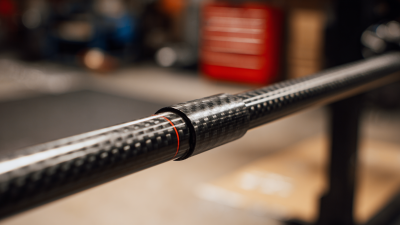
A reliable carbon fiber bar should have a clean, consistent surface. Look for uniform resin coverage, without pinholes, bubbles, cracks, or exposed fibers. Run a cotton cloth along the bar. It should not snag. A slightly dull finish is not automatically defective, but uneven gloss may indicate processing variation. Ask for production samples, not only polished photographs. I once accepted a bar with minor surface marks. They later complicated bonding and required extra preparation.

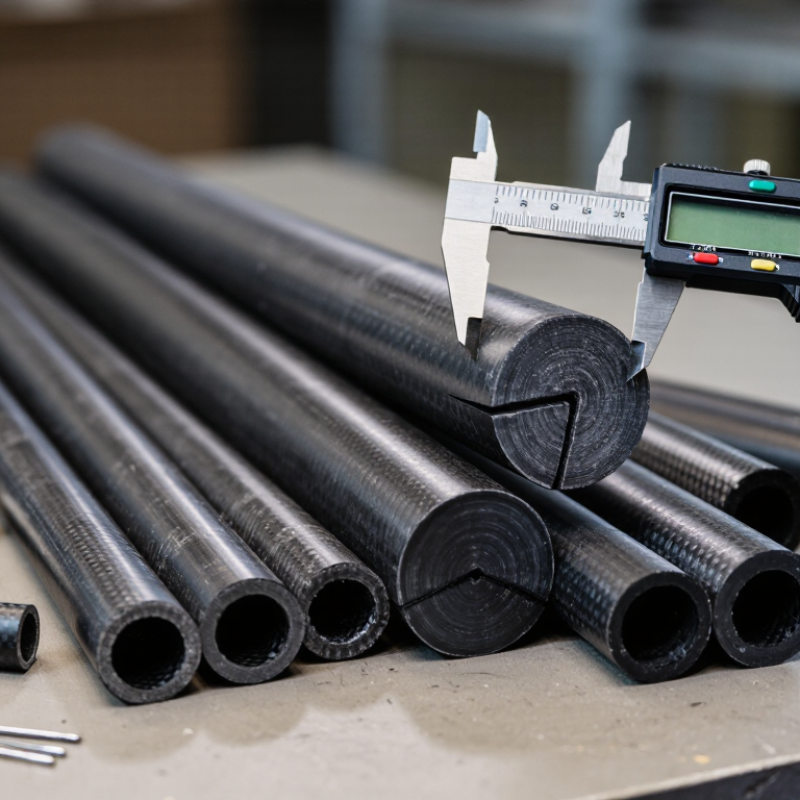
Check dimensional tolerances against your actual assembly needs. Measure diameter, straightness, and length at several points. A bar can meet its average diameter while still causing a tight fit. Request inspection records and the measurement method used. Calipers may be inadequate for very tight tolerances. This detail matters.

Review durability through load data, fatigue testing, and fiber orientation. Tensile strength alone does not predict long-term performance. Ask how the bar behaves after repeated bending, vibration, and impact. Small flaws can grow under cycling. They may not appear during a quick visual check. Confirm whether the resin system resists moisture, ultraviolet exposure, heat, and chemicals used in your workplace. A coating can improve protection, but it may hide surface defects. Test the finished bar in realistic conditions, including temperature changes and wet-dry cycles. Environmental resistance is application-specific, not a universal label. Keep records of batch numbers, test results, and rejected samples. That habit improves traceability and exposes inconsistent supply.

7 Tips for Choosing Pultrusion Carbon Fiber Bar

Preliminary screening targets for surface finish, dimensional control, durability, and environmental resistance

The chart presents representative engineering screening benchmarks rather than universal product specifications. Surface quality should be checked for cracks, exposed fibers, resin-rich areas, and voids; dimensional tolerance should be verified with calibrated gauges. Tensile strength and modulus are commonly evaluated using composite test methods such as ASTM D3916, while moisture absorption and weathering can be assessed with ASTM D570 and ASTM D4329. Final acceptance values should always follow the project design and testing requirements.

Evaluating Suppliers, Certifications, Customization, and Total Cost

Choosing a pultrusion carbon fiber bar starts with the supplier, not the catalog price. Ask how long they have produced structural profiles. Request recent sample data and production photos. Review process controls, resin mixing, die maintenance, and curing temperatures. Request batch traceability and a written quality plan. Prefer suppliers who explain failures honestly. That matters.

Treat certifications as evidence, not decoration. Verify the ISO 9001 scope, material certificates, and independent test reports. Match testing to the application. Check tensile strength, modulus, shear, heat exposure, and dimensional tolerance. Ask for lot-level results. A generic certificate may not cover your exact bar. Define customization early, including diameter, length, resin system, surface finish, drilling, and end protection. Approve a pilot batch. Small changes can affect pull force and straightness. I learned this after assuming identical tooling would produce identical results. It did not.

Calculate total cost beyond the unit price. Include tooling, setup waste, cutting, packaging, freight, inspection, storage, and rejected pieces. Compare the cost per accepted bar, not cost per meter. Confirm lead times during peak production. Check minimum order quantities and replacement terms. Keep samples from approved lots. They help when performance changes later. Do not trust perfect projections. Carbon profiles can warp, chip, or arrive with damaged ends. A supplier who documents corrective action may be safer than one offering the lowest quote.

7 Tips for Choosing Pultrusion Carbon Fiber Bar - Evaluating Suppliers, Certifications, Customization, and Total Cost
No. Evaluation Dimension What to Verify Practical Data or Acceptance Criteria Documents and Questions to Request Suggested Weight
1 Supplier Capability and Process Control Confirm that the supplier actually controls pultrusion, resin impregnation, curing, cutting, inspection, and packing rather than only reselling finished bars. Look for documented lot traceability from raw-material batch to finished-bar inspection. A practical starting requirement is 100% identification of production lots and retained inspection records for every shipment. Request the manufacturing-flow chart, quality manual, process-control plan, equipment list, inspection frequency, corrective-action procedure, and a sample certificate of analysis. 15%
2 Certifications and Test Validity Check whether the quality certificate applies to the relevant manufacturing site and product scope. Separate management-system certification from product-performance evidence. Prefer a current ISO 9001 certificate with matching site scope. For mechanical testing, specify an agreed method such as ISO 527-4 or ISO 527-5, or an equivalent contractual test method, before comparing results. Request certificate number, issuing body, scope, issue date, expiry date, test laboratory details, test direction, specimen dimensions, conditioning, and raw test data. 15%
3 Carbon Fiber and Resin System Evaluate fiber form, fiber volume fraction, resin chemistry, curing system, surface finish, and compatibility with the intended environment. For preliminary screening, pultruded carbon-fiber composites commonly have a density of approximately 1.5–1.7 g/cm³. The supplier should provide actual measured density and fiber/resin information for the selected grade. Request fiber type and sizing compatibility, resin type, nominal fiber volume fraction, density, glass-transition-temperature data where applicable, SDS, and storage-life requirements. 15%
4 Mechanical Performance and Consistency Compare longitudinal tensile strength, tensile modulus, flexural properties, shear behavior, dimensional stability, and batch-to-batch variation. A broad screening range for pultruded carbon-fiber rods is approximately 1,000–2,500 MPa tensile strength and 100–180 GPa tensile modulus; these are not universal specifications and must be replaced by grade-specific guaranteed values. Request at least three recent batch reports, test direction, average and minimum values, standard deviation if available, failure mode, conditioning temperature, and allowable design factors. 20%
5 Customization and Dimensional Control Assess the supplier's ability to produce required diameter, length, straightness, end finish, drilling, chamfering, coating, marking, and packaging. Define dimensional requirements on the drawing rather than relying on “standard tolerance.” Record nominal diameter, permitted diameter deviation, cut-length tolerance, straightness, surface defects, and end condition. Request a capability sample, dimensional inspection report, minimum order quantity, tooling requirement, tooling ownership, prototype lead time, production lead time, and change-control process. 15%
6 Durability and Application Fit Match the bar to temperature, moisture, ultraviolet exposure, chemicals, cyclic loading, electrical requirements, and installation conditions. Do not treat tensile strength alone as a durability guarantee. Require application-specific evidence for elevated temperature, water absorption, UV exposure, salt environment, or repeated loading when those conditions apply. Request environmental test procedures, exposure duration, pre- and post-test results, recommended service-temperature limits, UV or surface-protection options, and installation restrictions. 10%
7 Total Cost of Ownership Compare material price, tooling, machining, inspection, packaging, freight, import charges, rejects, inventory, and replacement risk instead of comparing unit price only. Use a landed-cost model based on price per usable meter or per accepted piece. Include yield loss, minimum order quantity, lead time, payment terms, warranty, and the cost of qualification testing. Request a line-item quotation with Incoterms, packaging dimensions, net and gross weight, tooling amortization, inspection charges, delivery schedule, payment terms, warranty, and quotation validity. 10%
Illustrative Total-Cost Calculation for a 10 mm Diameter Carbon-Fiber Pultruded Bar
Cost Element Calculation Basis Illustrative Value Cost per Usable Meter
Composite material content 10 mm diameter × 1 m length × 1.60 g/cm³ density Approximately 0.126 kg/m USD 2.51
Conversion and curing Continuous pultrusion, cutting, inspection, and handling Planning allowance USD 1.20
Cutting, end finishing, and packing Standard cut length with protective packaging Planning allowance USD 0.35
Freight and import-related charges Allocated by shipment weight and package volume Planning allowance USD 0.45
Yield and rejection allowance 5% allowance applied to the subtotal above Quality and handling reserve USD 0.23
Estimated landed cost Material + conversion + finishing + logistics + allowance Illustrative planning model USD 4.74/m
Note: The cost example is a transparent planning calculation, not a supplier quotation. Actual pricing depends on diameter, length, fiber grade, resin system, tolerances, order quantity, tooling, inspection requirements, packaging, destination, and delivery terms. Mechanical-property ranges should be used only for early screening and must be replaced by verified, product-specific test data before approval.