Demand for Pultrusion Carbon Fiber Bar is rising as infrastructure, transport, robotics, and energy projects seek lighter reinforcement. CompositesWorld’s annual State of the Industry reports continued investment in carbon fiber capacity and automated composite manufacturing. MarketsandMarkets’ Pultrusion Market analysis also identifies carbon fiber profiles as a higher-performance segment, supported by corrosion resistance, low weight, and consistent production. The opportunity is real. Supplier quality still varies.
Dr. Vlastimil Kunc, a recognized composites manufacturing expert, emphasizes a practical principle: “Process control is central to composite performance.” That observation matters when comparing global suppliers. A reliable bar should show stable fiber tension, controlled resin content, accurate diameter, and repeatable tensile strength. Imagine a 12-millimeter bar leaving the die with a clean surface, then fitting precisely into a bridge reinforcement system. Small deviations can create installation problems later. ISO 9001 certification helps, but it does not replace independent testing. Buyers should review ASTM D7205 or equivalent tensile data, batch traceability, environmental testing, and delivery records. Regional availability also affects lead times and project risk.
This overview examines leading manufacturers across North America, Europe, and Asia. It considers production capability, technical support, customization, certifications, and application experience. No ranking is perfect. Public data can be incomplete. That limitation deserves attention. Supplier claims should be checked against test reports, reference projects, and samples before procurement.
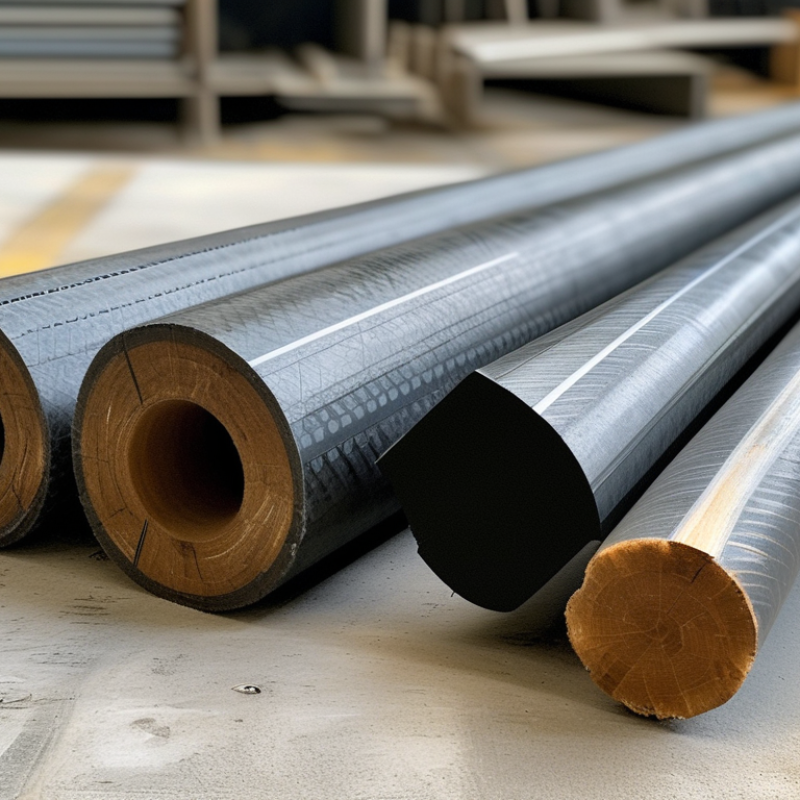
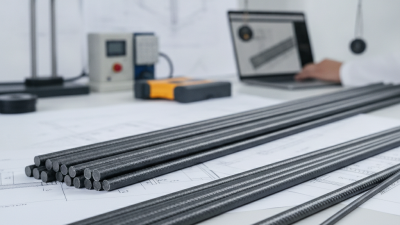
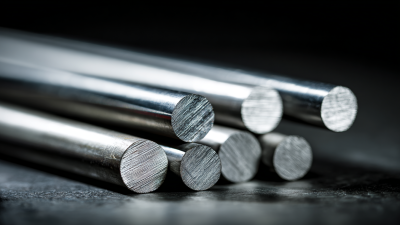
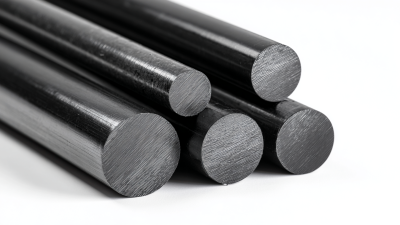
Pultruded carbon fiber bars are composite rods made by pulling aligned carbon fibers through resin and a heated die. The fibers carry most of the tensile load, while the cured resin locks them into a stable shape. This continuous process creates consistent bars with high strength, low weight, and useful corrosion resistance.
Manufacturing begins with dry carbon fiber rovings, often stored on large creels. Guides spread the fibers evenly before they enter a resin bath. The wet bundle then passes through forming guides, which remove excess resin and control the final diameter. Inside a heated steel die, the resin cures around the fibers. Pulling equipment maintains steady tension and speed. Small changes matter. Uneven tension can create waviness, voids, or weak areas.
Quality-focused suppliers inspect fiber alignment, resin content, diameter, surface finish, and tensile performance. A practical check may involve measuring several points along a bar, not just one end. Cut sections can reveal trapped air or resin-rich edges. The process is highly repeatable, but it is not flawless. Humidity, die temperature, and handling can affect results. Some suppliers improve reliability through batch records, calibrated testing, and traceable raw materials. Buyers should also request technical data, tolerance information, and samples before placing large orders. Clear documentation often says more than polished marketing language.

A leading global carbon fiber bar supplier is judged beyond catalog price. In practical sourcing, process control matters most. Pultrusion lines should maintain steady fiber tension, resin temperature, and curing speed. Small changes can alter stiffness, surface finish, and drilling behavior. Ask for batch-level tensile, flexural, and dimensional data. A serious supplier can explain test methods, sample conditioning, and allowable variation.
Reliability also appears in traceability. Each bundle should connect to fiber grade, resin system, production date, and inspection record. Clear packaging protects bars from moisture, bending, and impact during long-distance transport. Suppliers serving different climates should discuss storage limits and field handling. Capacity matters, but realistic lead times matter more. A factory promising everything may understand little.
Technical support separates a manufacturer from a trading desk. Engineers should help match bar diameter, fiber orientation, resin chemistry, and anchoring requirements to the application. Compliance documents should be current, readable, and relevant to the destination market. Independent testing adds credibility when projects carry structural risk. Still, no supplier is perfect. Polished data sheets may fail to explain measurement uncertainty. That gap deserves direct questions, not polite assumptions. A useful evaluation includes trial orders, dimensional checks, pull tests, and installer feedback. Price remains important, but inconsistent quality can quietly erase the original saving.
Major pultrusion carbon fiber bar suppliers are clustered across Asia, Europe, and North America. Their locations reflect access to carbon fiber, resin systems, skilled technicians, and export infrastructure.
China supports large-scale production, especially in coastal industrial provinces with established composite supply chains. Germany and Italy host experienced manufacturers serving construction, transport, and industrial engineering markets. North American suppliers are commonly located near aerospace, infrastructure, and energy centers. Japan and South Korea also maintain advanced composite production, with strong process controls and precision testing. Turkey and Eastern Europe offer growing capacity, often supported by regional manufacturing networks.
Location alone does not prove quality.
In practical sourcing work, buyers should examine factory capabilities rather than rely on a country label. A reliable supplier should provide batch records, fiber alignment data, tensile results, dimensional tolerances, and resin specifications. Ask for recent test reports. Factories near major ports may shorten delivery times, but inland plants can offer better production focus and technical support.
Regional assumptions can mislead. Some smaller producers deliver excellent consistency, while larger facilities may struggle with communication or customization. That detail matters. Buyers should compare sample bars, surface finish, straightness, packaging, and response speed before placing volume orders. An in-person audit can reveal curing equipment, storage conditions, and worker practices. Remote evidence is useful, but it cannot replace direct verification when long-term performance matters.
Top Pultrusion Carbon Fiber Bar Suppliers Worldwide?
How Do Leading Suppliers Compare in Quality, Capacity, and Customization?
Quality begins with consistency, not impressive photographs. Leading pultrusion suppliers control fiber alignment, resin content, curing temperature, and surface finish. ASTM D3917 provides dimensional guidance for pultruded profiles, while ISO 9001 systems support repeatable production. Still, certification is not proof of perfect bars. Ask for recent tensile, shear, moisture, and fatigue results from the exact profile.
Capacity also needs careful interpretation. The 2024 MarketsandMarkets Carbon Fiber Market report estimates strong market expansion through 2029, driven partly by infrastructure and energy applications. Rising demand does not guarantee short delivery times. Compare active production lines, die availability, monthly output, and backup equipment. A supplier may advertise high capacity but outsource critical steps. That can create uneven batches. It happens.
Tips: Request three production samples, not one. Measure diameter, straightness, fiber volume, and cut length independently. Check whether test data matches your resin system and operating temperature.
Customization separates capable suppliers from ordinary ones. Experienced teams can adjust fiber architecture, resin chemistry, bar length, grooves, holes, and protective coatings. They should also provide drawings, tolerances, lot traceability, and trial-production records. The 2023 JEC Observer highlights infrastructure and renewable-energy applications as important composites growth areas. These projects often require stable supply over years, not just a successful prototype. A practical comparison should score quality evidence, capacity resilience, engineering support, and total delivered cost. Price alone is a weak test.
The table below presents anonymized supplier profiles using industry-typical specification ranges for pultruded carbon fiber bars. Values are indicative benchmarks for supplier screening and should be verified against current technical datasheets, inspection reports, and quotations.
| Evaluation Dimension | Profile 1 Standard Industrial Supplier |
Profile 2 High-Strength Specialist |
Profile 3 High-Modulus Specialist |
Profile 4 Custom Engineering Supplier |
|---|---|---|---|---|
| Primary Market Focus | Construction reinforcement, utility products, and general industrial components | Infrastructure strengthening, sporting goods, and high-load structural parts | Aerospace-adjacent components, precision tooling, and lightweight structures | Low-to-medium volume projects requiring special geometries or material combinations |
| Typical Tensile Strength | 1.8–2.2 GPa | 2.2–3.5 GPa | 1.5–2.5 GPa | 1.8–3.0 GPa, depending on fiber and resin selection |
| Typical Tensile Modulus | 120–145 GPa | 130–170 GPa | 240–650 GPa, depending on high-modulus fiber grade | 120–650 GPa, subject to design requirements |
| Typical Fiber Volume Fraction | 55–65% | 60–70% | 55–68% | 50–70%, optimized for the application |
| Common Bar Diameter Range | 2–25 mm | 3–20 mm | 2–15 mm | 1–30 mm, subject to tooling feasibility |
| Dimensional Tolerance | Typically ±0.10–0.20 mm | Typically ±0.05–0.15 mm | Typically ±0.05–0.10 mm | Agreed by drawing; commonly ±0.05–0.20 mm |
| Available Cross-Sections | Round, square, rectangular, and standard solid profiles | Round and structural profiles with reinforced surface finishes | Precision round, flat, thin-wall, and low-deflection profiles | Custom solid, hollow, grooved, oval, and hybrid profiles |
| Resin Systems | Epoxy, vinyl ester, and polyester | Epoxy and vinyl ester, including higher-temperature formulations | Epoxy and specialty high-temperature resin systems | Epoxy, vinyl ester, polyester, and application-specific formulations |
| Continuous Production Capability | Usually suitable for continuous lengths and standard cut lengths | Continuous production with tighter process control for structural grades | Continuous production focused on precision and low-deflection profiles | Pilot runs, short batches, and continuous production after tooling approval |
| Indicative Annual Capacity | Approximately 100–500 metric tonnes | Approximately 200–800 metric tonnes | Approximately 50–300 metric tonnes | Approximately 20–250 metric tonnes, depending on product mix |
| Quality Documentation | Lot traceability, dimensional inspection, and mechanical test reports | Lot traceability, process records, mechanical testing, and stricter batch controls | Material certificates, dimensional data, and detailed fiber/resin records | Inspection plans, first-article reports, control plans, and customer-specific documentation |
| Common Quality Standard Availability | ISO 9001-based quality systems are commonly available | ISO 9001-based systems; sector-specific controls may be available on request | ISO 9001-based systems with enhanced material and dimensional controls | Quality procedures can usually be aligned with customer drawings and inspection plans |
| Surface Finish Options | Standard smooth, matte, sanded, or coated surfaces | Smooth, abrasion-resistant, textured, and bonding-enhanced surfaces | Low-waviness, precision-machined, and controlled-finish surfaces | Custom surface texture, coating, machining, drilling, and end finishing |
| Customization Capability | ★★★☆☆ | ★★★★☆ | ★★★★☆ | ★★★★★ |
| Typical Minimum Order Flexibility | Moderate; standard sizes generally offer better purchasing flexibility | Moderate; custom grades may require higher minimum quantities | Limited to moderate because specialty fibers and tooling increase cost | Usually the most flexible for prototypes and engineering trials |
| Indicative Tooling Lead Time | Approximately 2–6 weeks for new standard-profile tooling | Approximately 3–8 weeks for reinforced or precision tooling | Approximately 4–10 weeks for precision or high-temperature tooling | Approximately 4–12 weeks, depending on profile complexity and validation |
| Best Fit for Buyers | Buyers prioritizing stable supply, standard dimensions, and balanced cost | Buyers prioritizing high tensile performance and structural reliability | Buyers prioritizing stiffness, low weight, and dimensional precision | Buyers requiring design support, unusual profiles, or application-specific testing |
| Key Verification Questions | Confirm batch consistency, diameter tolerance, cut-length accuracy, and test frequency | Confirm fiber grade, tensile test method, resin content, and fatigue data | Confirm modulus test method, fiber alignment, thermal performance, and surface quality | Confirm tooling ownership, prototype policy, validation plan, and change-control procedure |
Choosing a worldwide pultrusion carbon fiber bar supplier requires more than comparing prices. MarketsandMarkets estimated the global carbon fiber market at about USD 4.9 billion in 2023, with projected growth to USD 8.2 billion by 2028. Rising demand can encourage faster production and weaker inspection. Buyers should request batch-specific data, not only a polished catalog.
Check tensile strength, modulus, diameter tolerance, fiber volume, resin type, and surface finish. Test results should identify standards, specimen dimensions, curing conditions, and failure modes. ASTM D3039 or ISO 527-5 can support composite tensile evaluation. A claimed strength value means little without test conditions. Ask for certificates of analysis, lot traceability, calibration records, and nonconformance procedures. I have seen technically impressive samples fail after scaling. Small diameter variation can also disrupt automated assembly.
Tips: Request three recent production lots. Compare their mean values and variation. Audit storage, pulling speed, die temperature, and packing methods. Confirm annual capacity, lead time, minimum order quantity, export documents, and Incoterms. The 2024 MarketsandMarkets forecast suggests continued market expansion, but it does not prove supplier reliability. Check references from similar applications and arrange independent testing before approval. Do not ignore communication delays; they often appear before quality problems.
The chart shows a suggested buyer evaluation weighting for global pultruded carbon fiber bar suppliers. Mechanical test evidence, dimensional consistency, traceability, quality systems, environmental durability data, and export capability should all be reviewed before qualification. Buyers should adjust the weighting according to the application, required standards, and destination-market regulations.