- Home
- Products
- About Us
- News
- Blog
- Video
- Contact
Leave Your Message
Choosing among China’s top Stab Resistant Fabric manufacturers requires more than comparing prices or catalog photographs. Product performance depends on fiber construction, layering, coating, seam design, and verified testing. A fabric that feels dense may still show weak results under controlled penetration tests. Buyers should examine technical datasheets, sample reports, production records, and quality-control procedures before making decisions.
This guide introduces practical criteria for evaluating experienced Chinese suppliers. It considers material consistency, customization ability, export experience, communication, and compliance with relevant safety standards. Reliable manufacturers should explain test methods clearly, identify fabric composition, and provide traceable batch information. Factory audits and independent laboratory testing can reveal details that marketing pages often omit. Small differences matter. Stitch spacing, edge finishing, moisture behavior, and repeated-use durability can affect the final garment.
The discussion also recognizes an uncomfortable point: no single fabric suits every protective application. Performance may change after washing, folding, abrasion, or long-term storage. Some suppliers provide impressive laboratory figures but limited field evidence. That gap deserves careful attention. Buyers should define the intended environment, required protection level, comfort expectations, and local regulatory requirements before requesting quotations. A thoughtful comparison can reduce procurement risk and support safer, more dependable product development. Claims should remain evidence-based, not promotional. That is where supplier credibility is truly tested.
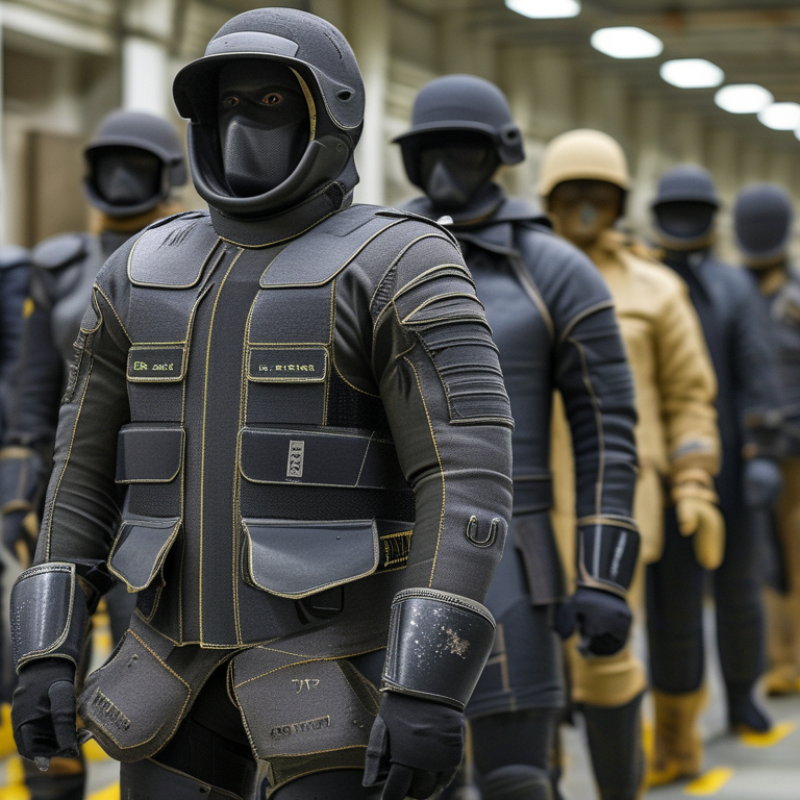
Stab-resistant fabric is engineered to slow or stop penetration from sharp-point impacts. It usually combines tightly woven, high-strength fibers with laminated layers. When pressure reaches the surface, the fibers spread the force across a wider area. Some layers also shift slightly, reducing the chance of one point passing straight through.
The protection depends on fiber type, weave density, layer count, and construction quality. A flexible panel may feel comfortable, while a thicker design can offer greater resistance but reduce movement. Reliable Chinese manufacturers should provide independent test results, material specifications, and clear care instructions. However, “stab-resistant” does not mean invincible. Repeated impacts, worn seams, moisture, or poor fitting can reduce performance. This is easy to overlook.
Tips: Check the tested protection level, not only the product description. Inspect stitching, edges, and closures before use. The fabric should cover vulnerable areas without restricting breathing or normal movement. Wash it only as instructed, since heat and harsh chemicals may weaken performance. A small fitting mistake matters. Regular inspection is wise, even when the fabric looks unchanged.
| Fabric Category | Common Fiber or Construction | How It Resists Stabs | Typical Protection Level | Typical Applications | Important Manufacturing Considerations |
|---|---|---|---|---|---|
| High-tenacity aramid fabric | Para-aramid yarns woven into plain, twill, or multilayer constructions | High tensile strength and low elongation help distribute the blade or spike force across multiple yarns. | Often used for cut and puncture-resistant garments; the actual stab rating depends on fabric weight, layers, and design. | Security uniforms, protective sleeves, gloves, and inner garment panels | Control yarn count, weave density, seam strength, edge finishing, and moisture or ultraviolet exposure during service. |
| Ultra-high-molecular-weight polyethylene fabric | UHMWPE tapes or yarns arranged in woven or laminated layers | Very high strength-to-weight performance allows the material to spread load and resist yarn rupture. | Suitable for lightweight cut, slash, and puncture-resistant systems; certified performance must be verified by testing. | Lightweight protective clothing, gloves, liners, and flexible protective panels | Manage heat exposure, creep, surface friction, lamination quality, and compatibility with dyes and coatings. |
| High-performance nylon fabric | High-tenacity nylon 6 or nylon 6,6 in tightly woven or coated constructions | Dense construction and yarn toughness improve resistance to tearing, snagging, and limited puncture penetration. | Generally more suitable for cut, abrasion, and tear resistance than for high-level stab protection on its own. | Workwear, bags, tactical clothing, outer shells, and reinforcement zones | Fabric density, coating adhesion, hydrostatic performance, abrasion resistance, and seam construction affect final protection. |
| Multilayer composite fabric | Combinations of aramid, UHMWPE, nylon, nonwoven layers, films, or spacer fabrics | Multiple layers slow penetration, distribute impact, and reduce the chance that a single yarn failure creates a complete path through the panel. | Can be engineered for higher stab or spike resistance than a single fabric layer, subject to the tested configuration. | Protective vests, security clothing, prison-service uniforms, and equipment panels | Maintain consistent layer order, basis weight, bonding strength, flexibility, coverage, and wash durability. |
| Coated or laminated textile | Woven technical fabric combined with polyurethane, thermoplastic, or other polymer layers | The coating can increase stiffness, friction, tear resistance, and resistance to blade or spike movement. | Performance varies widely; a coating alone should not be treated as proof of stab resistance. | Protective covers, flexible panels, workwear reinforcements, and industrial fabrics | Verify coating thickness, bond strength, flexibility at low temperature, hydrolysis resistance, and aging behavior. |
| Knitted protective fabric | Engineered knitted structures using aramid, polyethylene, stainless-steel blend, or composite yarns | Loop structure provides stretch and comfort, while high-performance yarns improve resistance to cuts and punctures. | Commonly used for cut and slash protection; stab performance requires product-specific testing. | Gloves, sleeves, base layers, and close-fitting protective apparel | Control stitch density, stretch recovery, yarn covering, comfort, dimensional stability, and seam opening. |