How to Choose the Best Carbon Fiber Rope for Your Needs?
Choosing the right carbon fiber rope can significantly impact your project’s success. These ropes offer strength and lightweight properties, making them ideal for various applications. However, not all carbon fiber ropes are equal. It's essential to consider the specific requirements of your task.
When exploring options, focus on key attributes such as tensile strength, resistance to wear, and flexibility. Carbon fiber rope can be delicate and may not perform well in every situation. Understanding the nuances in quality can save time and effort.
Many users overlook factors like environmental exposure and weight limits. It’s crucial to reflect on your needs and not rush the decision. Engaging with experts or reading reviews can provide valuable insights. Choosing the best carbon fiber rope means acknowledging both its advantages and limitations.
Understanding Carbon Fiber Rope and Its Advantages
Carbon fiber rope is increasingly popular due to its unique properties. It is lighter than steel yet incredibly strong. This makes it an ideal choice for various applications, from boating to outdoor sports. The durability of carbon fiber is impressive; it withstands harsh weather conditions and resists wear over time.
One of the primary advantages of carbon fiber rope is its high tensile strength. It can bear heavy loads without snapping, which is essential for safety in any application. Moreover, this rope has excellent resistance to chemicals, making it suitable for marine environments. However, not all carbon fiber ropes are created equal. Some may compromise flexibility for strength. It’s crucial to assess your specific needs to avoid purchasing a rope that may not perform well under pressure.
Investing in carbon fiber rope can be rewarding, but you should be careful. Many factors come into play, including length, thickness, and intended use. Failing to consider these aspects can lead to poor performance. Take time to reflect on what you truly need. Ensuring you choose the right carbon fiber rope requires careful thought and understanding of its properties and potential limitations.
How to Choose the Best Carbon Fiber Rope for Your Needs?
| Property |
Description |
Advantages |
| Tensile Strength |
Measure of the maximum amount of tensile (pulling) stress that a material can withstand before failure. |
High resistance to breaking, making it ideal for heavy-duty applications. |
| Weight |
The overall lightweight nature of carbon fiber compared to other materials. |
Easier handling and reduced fatigue during use. |
| Corrosion Resistance |
The ability of the material to withstand degradation due to environmental factors. |
Longevity and durability in outdoor or marine applications. |
| Flexibility |
The degree to which the rope can bend without breaking. |
Versatility in use across different applications and settings. |
| Cost |
The overall price point of carbon fiber rope compared to equivalent materials. |
May require a higher upfront investment but benefits long-term performance. |
Identifying Your Specific Needs and Application Requirements
Choosing the right carbon fiber rope starts with understanding your specific needs. What will you use it for? Consider factors like load capacity, environment, and flexibility. Different applications require different properties. For instance, sailing requires durability against harsh weather, while climbing may prioritize lightweight materials.
Tips: Evaluate the breaking strength of the rope. This can directly affect safety during use. Also, think about the diameter; it impacts both weight and grip.
Think about the environment as well. Will the rope be exposed to UV rays or saltwater? These factors can degrade the material over time. Knowing this helps in making an informed choice.
Tips: Always check for reviews or testimonials on the carbon fiber rope. User experiences can provide insights into its long-term reliability. Also, test the rope in a controlled setting if possible to observe any unexpected challenges.
Evaluating Strength, Flexibility, and Weight of Carbon Fiber Rope
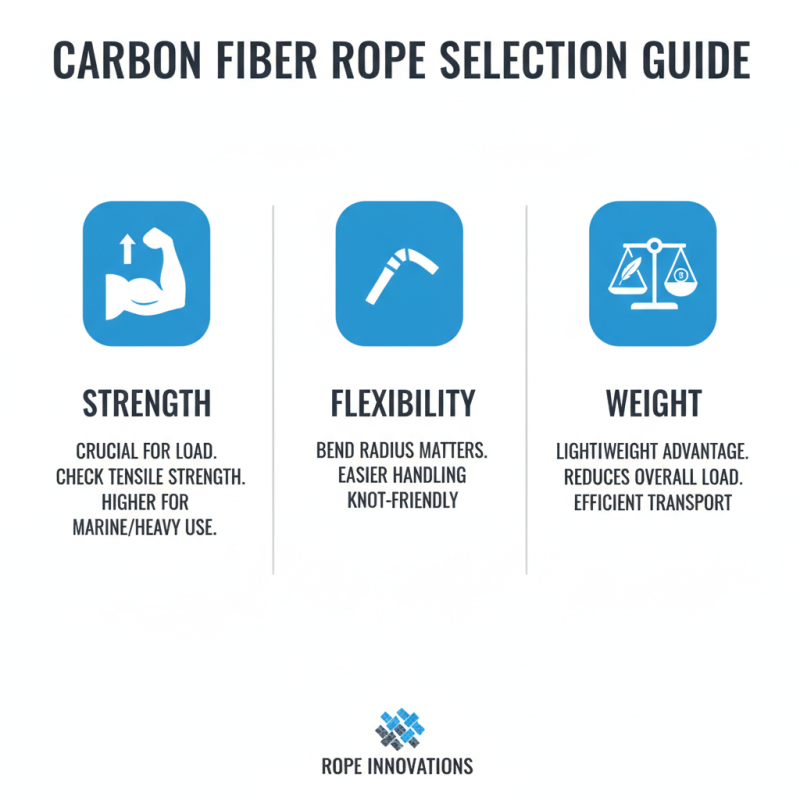
When choosing a carbon fiber rope, evaluating its strength is crucial. Strength determines how much load the rope can handle without breaking. It’s essential to look for metrics like tensile strength, which indicates the maximum stress the rope can endure. Consider your intended use. If you're using the rope for marine applications, a higher strength is usually necessary.
Flexibility is another important factor. A more flexible rope can adjust easily to various applications, but may sacrifice some strength. Think about how you will use the rope. It needs to navigate around corners or be coiled for storage. Sometimes, you may find that a stiffer rope seems to hold its form better but may not provide the versatility you need.
Weight also plays a vital role. Lighter ropes are easier to handle and transport. However, lightweight options might compromise strength. It can be tempting to go for the lightest option available, but this could lead to performance issues. Consider balancing all three aspects: strength, flexibility, and weight, and finding the right combination will ultimately serve your specific needs. Weigh your options carefully and reflect on the intended applications before making a choice.
Comparing Different Brands and Features of Carbon Fiber Ropes
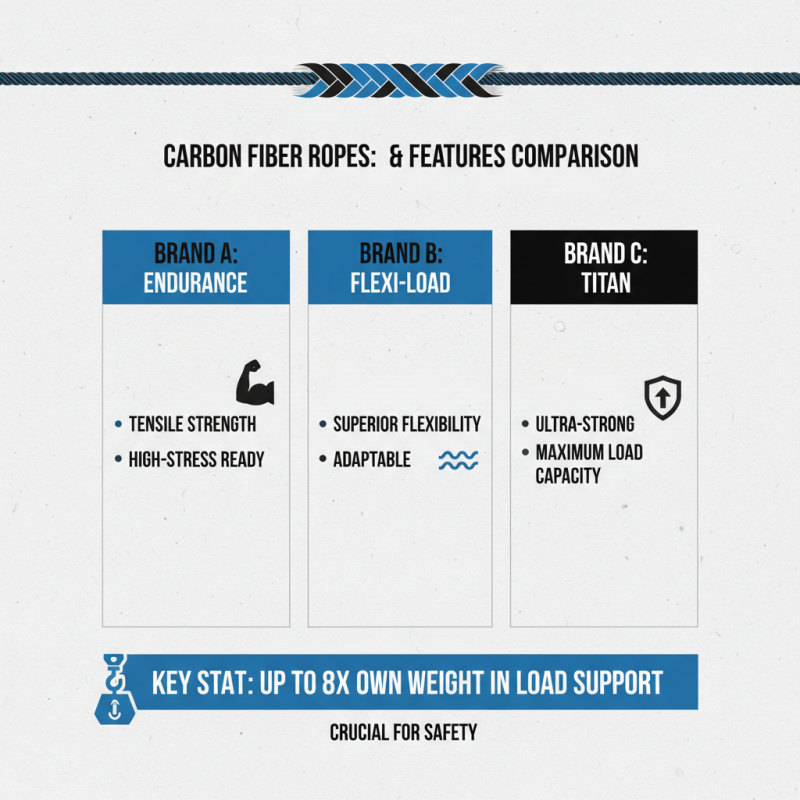
When comparing different brands of carbon fiber ropes, focus on their features. Not all ropes are made equal. Some excel in tensile strength, while others offer superior flexibility. According to a recent industry report, carbon fiber ropes can support loads up to eight times their weight. This statistic is crucial when considering safety in high-stress applications.
Materials and construction are vital in assessing quality. Some brands hide defects with fancy designs. Check for uniformity and any visible weak points. Proper brands will often have a quality assurance metric, ensuring reliability. A gap in these areas may indicate a lack of care in manufacturing. Notably, a robust warranty can be an indicator of a brand's confidence in its product.
When selecting a carbon fiber rope, consider the intended use. Will it face extreme conditions? Gathering user testimonials can reveal how ropes perform under stress. Explore reviews and ratings to gauge long-term reliability. Some users mention the ropes fraying or exhibiting less strength over time. Pay attention to these details to make an informed decision.
Tip: Always test the rope in safe conditions before full deployment. It’s wise to inspect it regularly. Be cautious of the weight and stress applied over time.
Assessing Cost vs. Performance for Your Carbon Fiber Rope Choice
When choosing carbon fiber rope, cost and performance are critical factors. High-quality ropes offer strength and durability, but they may come at a premium price. Balancing these aspects can be challenging. Consider the intended use of the rope. If the project demands high performance and reliability, investing in a more expensive option may pay off over time.
Tips: Evaluate specific requirements. Will the rope face harsh weather? Or will it be used for lightweight applications? Understanding the environment can help you choose the right price point. Don't overlook the importance of user reviews or expert recommendations. They often highlight long-term performance and durability.
Think about potential limitations. A cheaper option might not withstand heavy loads or abrasive conditions. Review material specifications carefully. Look for tensile strength and weight capacity. Sometimes, what seems economical in the short run can lead to higher costs down the line due to replacements. Be cautious, and make informed choices for your needs.