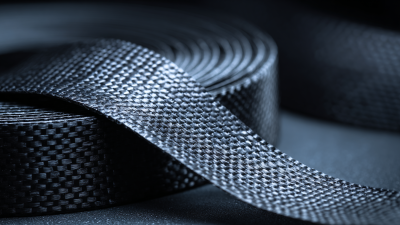
Carbon Fiber Webbing has gained significant traction in various industries due to its superior strength and lightweight properties. According to a report by Grand View Research, the carbon fiber market is projected to reach $6.4 billion by 2025, reflecting a growing demand for advanced materials. Industry expert Dr. Emily Chen emphasizes, "Carbon Fiber Webbing revolutionizes design by combining flexibility and durability."
These benefits make Carbon Fiber Webbing an essential material for many projects, from aerospace to sporting goods. Its high tensile strength-to-weight ratio allows engineers and designers to innovate without compromising performance. Yet, challenges remain. The cost of production and the need for specialized manufacturing processes can deter some potential users.
Understanding these complexities is crucial. The versatility of Carbon Fiber Webbing offers tremendous potential, but one must weigh the long-term investments against immediate needs. As the industry evolves, awareness and education will be key to unlocking its full potential.

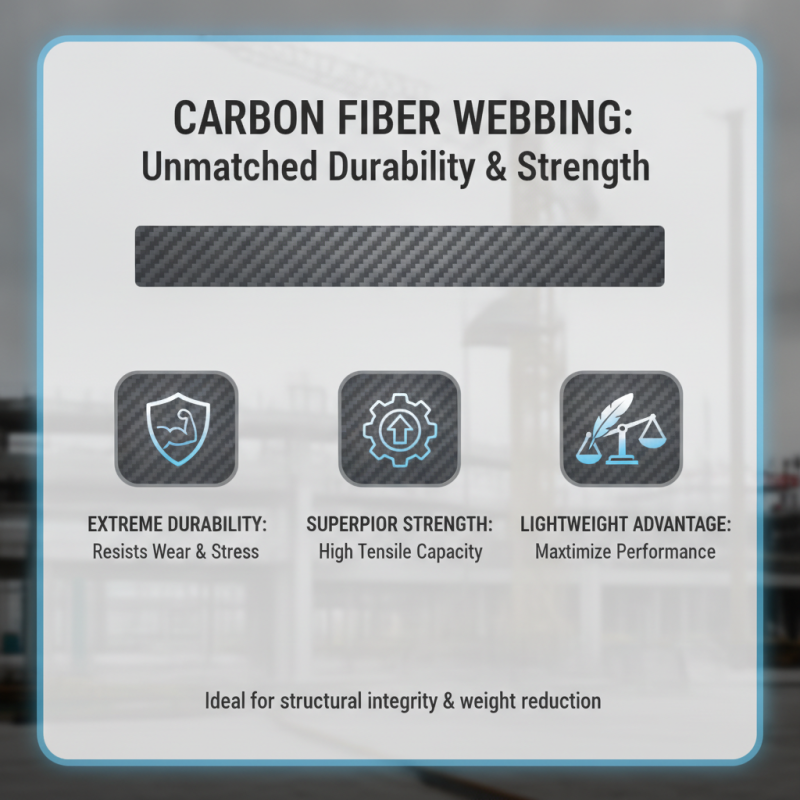
Carbon fiber webbing is becoming increasingly popular in various projects due to its unmatched durability and strength. This material is lightweight yet incredibly strong, making it ideal for applications where weight reduction is crucial without sacrificing structural integrity. When compared to traditional materials, carbon fiber webbing outperforms them in terms of tensile strength. It can withstand tremendous forces and is less likely to deform under stress.
Moreover, carbon fiber webbing demonstrates advanced resistance to environmental factors. It does not corrode like metal or degrade easily like some plastics. This makes it suitable for outdoor projects, ensuring longevity even in harsh weather conditions. However, while its benefits are clear, the cost can be a drawback for some users. Investing in carbon fiber webbing requires careful consideration of budget and project needs.
Projects using carbon fiber webbing often benefit from its flexibility. The material can be molded into various shapes and sizes, providing a unique advantage in custom designs. While many enjoy working with it, mastering the best techniques for handling and application can take time. Ultimately, leveraging carbon fiber webbing effectively requires both appreciation of its strengths and an awareness of its learning curve.
Carbon fiber webbing is revolutionizing project designs, especially in weight-sensitive applications. This material is known for its incredible strength-to-weight ratio. Using carbon fiber webbing can drastically reduce the overall weight of a project without sacrificing structural integrity. For instance, in aerospace or automotive industries, lighter components can significantly enhance performance and fuel efficiency.
Consider a boat. By replacing traditional materials with carbon fiber webbing, you achieve a faster and more agile design. The lightweight nature allows for quicker acceleration and maneuvering. However, transitioning to this innovative material does require careful consideration of its properties. While carbon fiber is strong, it can be prone to damage from impacts. Understanding these nuances is essential for successful implementation.
Additionally, the benefits extend beyond just weight reduction. Carbon fiber is resistant to environmental factors such as moisture and UV rays. This durability enhances the project's lifespan, allowing for long-term use and reducing the need for replacements. Yet, these advantages come with a learning curve. Ensuring proper handling and care during installation can be challenging. Embracing carbon fiber webbing is rewarding but requires diligence and knowledge to truly harness its potential.
| Benefit | Description | Weight Comparison |
|---|---|---|
| Lightweight | Carbon fiber webbing is significantly lighter than traditional materials, helping reduce overall project weight. | 50% lighter than nylon |
| Strength | Offers high tensile strength, providing durability and reliability for various applications. | 5 times stronger than steel |
| Flexibility | Maintains flexibility, allowing for creative designs without sacrificing integrity. | Flexible in numerous applications |
| Corrosion Resistance | Resistant to moisture and chemicals, making it ideal for outdoor and industrial uses. | No rusting observed |
| UV Resistance | Does not degrade under UV exposure, maintaining performance over time. | Stable performance in sunlight |
| Thermal Stability | Withstands extreme temperatures without losing structural integrity. | Functional in temperatures up to 200°C |
| Aesthetic Appeal | Provides a sleek, modern look for many projects, enhancing overall design. | High-end appearance |
| Low Maintenance | Requires minimal upkeep compared to traditional materials, saving time and cost. | Easy to clean surfaces |
| Versatile Applications | Used in a wide range of fields from sports to aerospace, showcasing its adaptability. | Applicable in multiple industries |
| Cost-Effective in Long-Term | Although initially more expensive, the durability and low maintenance lead to savings over time. | Lower lifetime costs |
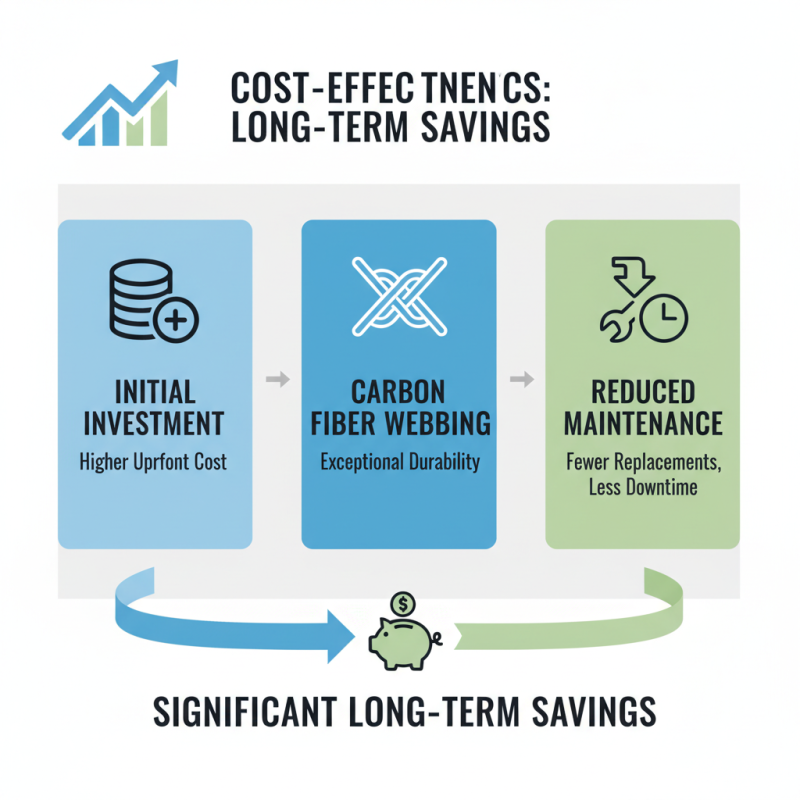
When considering materials for projects, cost-effectiveness is a crucial factor. Carbon fiber webbing stands out in this regard. Its durability significantly reduces the need for frequent replacements. This means less money spent on materials over time. The initial investment may be higher, but long-term savings are considerable. Projects that use carbon fiber often experience fewer maintenance issues, translating to fewer disruptions.
Additionally, carbon fiber webbing performs well in demanding environments. It withstands harsh weather and heavy loads. This resilience ensures that projects run smoothly. Fewer repairs mean more time and resources devoted to innovation, rather than maintenance. Observing this from current usage, many professionals note the decreased time spent fixing damages.
However, it is essential to consider the initial costs. For some, the upfront expense might seem daunting. It invites a reflection on budget priorities. Despite this, the benefits often outweigh the initial investment. Ensuring that projects remain on schedule and budget is key. Long-term savings and efficiency should guide material selection thoughtfully.
Carbon fiber webbing has emerged as a game-changer across multiple industries. Its unique properties make it suitable for applications in aerospace, automotive, and even recreational gear. According to industry reports, the global carbon fiber market is expected to grow by 10% annually, indicating a robust demand. This growth reflects the versatility of carbon fiber webbing, which can adapt to various project requirements.
In the automotive sector, carbon fiber webbing enhances the performance and safety of vehicles. Lightweight and strong, it contributes to improved fuel efficiency and reduced emissions. A study by the Department of Transport revealed that lightweight materials could decrease vehicle weight by up to 30%. However, the challenge remains in cost efficiency, as carbon fiber can be expensive to manufacture.
Different industries are beginning to recognize the potential of carbon fiber webbing. In aerospace, its strength-to-weight ratio is critical for aircraft design. Yet, there is a continuous need for innovation in production techniques to make it more accessible. In sports equipment, the integration of carbon fiber offers athletes enhanced performance. This blend of innovation and tradition prompts ongoing reflection on the balance between cost and quality in material selection.
Carbon fiber webbing is gaining attention for its environmental benefits. This material is lightweight yet incredibly strong. Its production process generates fewer emissions compared to traditional materials. Using carbon fiber can help reduce waste and promote sustainability in various projects.
The recycling potential of carbon fiber is noteworthy. While still evolving, methods to reclaim and reuse carbon fiber products are developing. This shift is crucial for reducing landfill waste. Projects that aim for sustainability can greatly benefit from exploring these options. However, challenges remain with the technology's accessibility.
Sourcing carbon fiber from responsible manufacturers is essential. Ethical practices in production contribute to lower environmental impacts. Consumers are more aware than ever of sustainability. This awareness drives demand for eco-friendly materials. Carbon fiber webbing offers a promising solution, but there is more to learn and implement.