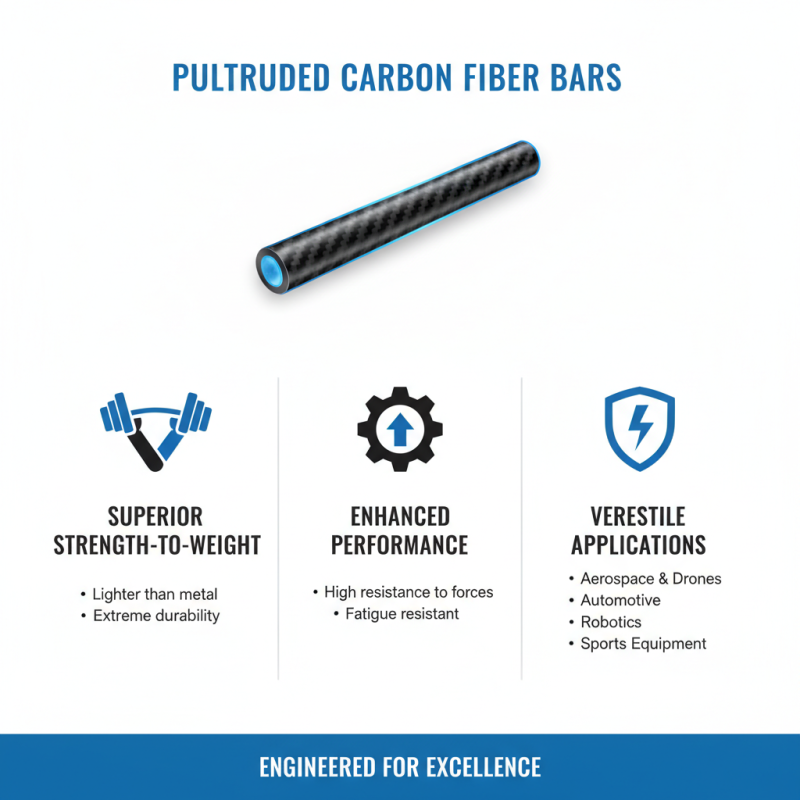
What Are the Benefits of Pultruded Carbon Fiber Bars?
In the evolving landscape of materials science, Pultruded Carbon Fiber Bars stand out for their numerous advantages. Industry expert Dr. Emily Carter, a leading figure in composite materials, once stated, "Pultruded Carbon Fiber Bars revolutionize structural applications with unmatched strength and lightweight properties." This insight reflects the growing recognition of these bars in various sectors, from aerospace to construction.
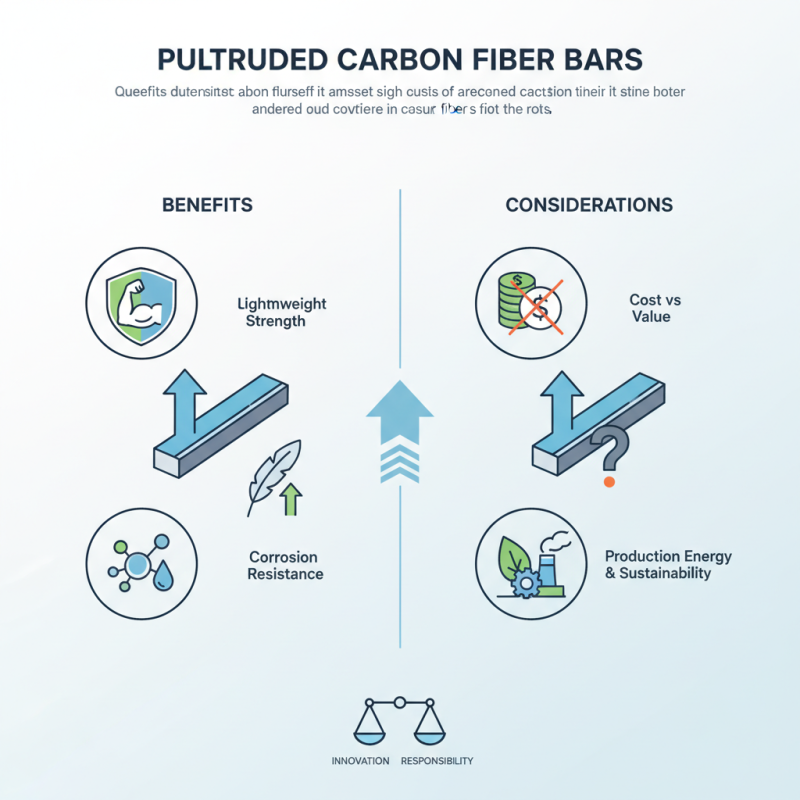
The unique manufacturing process of pultrusion creates bars that boast exceptional tensile strength and corrosion resistance. Businesses utilizing Pultruded Carbon Fiber Bars experience reduced weight items that enhance efficiency. Yet, not all applications fully leverage these benefits. There are instances where the cost may overshadow the advantages, prompting a deeper evaluation of material investment.
Furthermore, while the environmental impact of such materials is often touted, the energy used in production raises questions. This reflection invites us to consider not just the benefits, but also the sustainability of Pultruded Carbon Fiber Bars in our future projects. Achieving balance between innovation and responsibility is crucial as we explore these remarkable materials.
Benefits of Pultruded Carbon Fiber Bars in Structural Applications
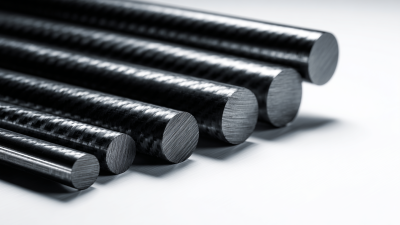
Pultruded carbon fiber bars offer several advantages in structural applications.
They are incredibly strong yet lightweight. This makes them ideal for projects where weight matters.
For instance, bridges, building frames, and outdoor structures often benefit from these properties.
The resistance to corrosion is another key factor.
This means less maintenance is required over time.
Tips: Always consider local climate when choosing materials.
In areas with high moisture, the corrosion resistance of carbon fiber can prevent long-term damage.
Each project may require a unique solution.
The durability of pultruded carbon fiber bars is remarkable.
They can withstand extreme temperatures, which is essential in many environments.
However, it's crucial to test them under specific conditions.
Not all applications yield the same results.
Understanding the material's limitations can lead to better designs.
Tips: Conduct thorough testing before full-scale implementation.
Real-world conditions can differ from theoretical models.
Ensure safety and longevity by validating performance in your specific use case.
Superior Strength-to-Weight Ratio of Pultruded Carbon Fiber Bars
Pultruded carbon fiber bars stand out for their impressive strength-to-weight ratio. This unique feature allows them to perform exceptionally well in demanding applications. They are often lighter than traditional materials yet provide better resistance to various forces. It’s not uncommon for engineers to choose these bars for their projects to enhance performance without adding excess weight.
The manufacturing process contributes to their strength. Pultrusion involves drawing fibers through a resin, creating a solid, durable product. However, this process can sometimes lead to inconsistencies. Variations in the fiber alignment or resin infusion can affect the overall quality. Designers need to be aware of these potential weaknesses. Testing is essential to ensure reliability, especially in critical applications.
Despite some imperfections in the manufacturing process, pultruded carbon fiber bars still offer significant advantages. Their minimal weight combined with high strength makes them ideal for constructions like bridges and aircraft. Engineers must continuously assess their choices and ensure the best material performance in their designs. These bars exemplify innovation in material science, showcasing how advanced technology can lead to remarkable solutions.
Corrosion Resistance and Durability of Carbon Fiber Materials
Carbon fiber materials are renowned for their exceptional corrosion resistance and durability. Unlike traditional metals, which can rust or degrade over time, carbon fiber shows remarkable longevity. According to industry studies, carbon fiber structures can last up to 30 years with minimal maintenance. This longevity makes them an attractive choice in various applications, from construction to aerospace.
One of the standout features of pultruded carbon fiber bars is their ability to withstand harsh environmental conditions. They resist chemicals and moisture that typically erode other materials. For instance, in marine settings, carbon fiber shows only a marginal loss in strength when exposed to saltwater, unlike steel, which can corrode rapidly. Reports suggest that carbon fiber's tensile strength remains intact even after prolonged exposure to corrosive substances.
Despite the impressive attributes, it's worth noting some challenges. Cost can be a barrier to widespread adoption. Often, organizations must weigh the immediate expense against long-term savings. Additionally, manufacturing processes can be complex, and quality control remains essential. Companies must constantly evaluate production techniques to ensure every bar meets the desired specifications, which can sometimes lead to inconsistencies.
What Are the Benefits of Pultruded Carbon Fiber Bars? - Corrosion Resistance and Durability of Carbon Fiber Materials
| Property |
Description |
Benefit |
| Corrosion Resistance |
Highly resistant to chemical and environmental degradation. |
Longer lifespan in harsh environments, reducing maintenance costs. |
| Durability |
Exceptional strength-to-weight ratio and impact resistance. |
Improved performance under stress with low weight, ideal for structural applications. |
| Lightweight |
Significantly lighter than traditional materials like steel or aluminum. |
Reduces overall project weight, enhancing design flexibility and efficiency. |
| Thermal Stability |
Resistant to extreme temperatures without losing structural integrity. |
Ideal for applications in varied temperature conditions, ensuring reliability. |
| UV Resistance |
Resistant to UV light degradation, maintaining color and properties over time. |
Suitable for outdoor applications with long service life and aesthetic retention. |
Cost-Efficiency in Production and Maintenance of Carbon Fiber Bars
Pultruded carbon fiber bars have become popular in various industries due to their cost-efficiency in production and maintenance. According to a report by Research and Markets, the global carbon fiber market is expected to grow at a CAGR of 10.2% from 2021 to 2028. This growth is largely driven by the decrease in production costs. The innovative pultrusion process reduces waste and allows for mass production. Manufacturers can produce these bars at lower costs, making them more accessible for diverse applications.
Maintenance costs are also lower with pultruded carbon fiber bars. They are resistant to corrosion and require minimal upkeep. A study in the Journal of Composite Materials highlighted that structures using carbon fiber experience about 30% less maintenance compared to traditional materials like steel. However, while carbon fiber offers these advantages, the initial investment can be high, and some specifications may need reevaluation.
Over time, many companies find that the long-term savings during operation outweigh the initial costs, yet this calculation is not always straightforward. Discussing carbon fiber’s carbon footprint is also necessary. The pultrusion process, while efficient, still has environmental impacts. Companies must consider recycling options as an emerging priority. This highlights a need for continuous improvement and innovation in sustainability practices within the industry.
Applications of Pultruded Carbon Fiber in Aerospace and Automotive Industries
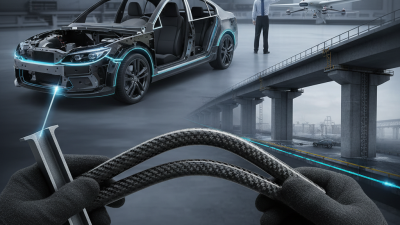
Pultruded carbon fiber bars are gaining traction in aerospace and automotive industries. They are lightweight and extremely strong. This combination allows for significant weight savings. In aerospace, reduced weight can directly influence fuel efficiency. Engineers often seek materials that enhance performance without compromising safety.
In automotive applications, pultruded carbon fiber plays a key role. It helps in creating more fuel-efficient vehicles. The stiffness and durability are vital for various components. Body structures or supports made from this material can withstand harsh conditions. However, there's a learning curve. Not all manufacturers have the expertise to utilize these materials effectively.
Moreover, challenges remain. The cost of pultrusion can be high. This may deter some companies from adopting the technology. Also, the recycling of carbon fiber is complex. Future developments must address these issues. Innovating applications is essential for broader adoption. These factors highlight the ongoing need for research and improvement in the field.
Benefits of Pultruded Carbon Fiber Bars in Aerospace and Automotive Industries