Top 10 Benefits of Pultruded Carbon Fiber Bar for Global Buyers?
The demand for lightweight materials has surged in recent years. Among these, the Pultruded Carbon Fiber Bar stands out for its unique properties. This innovative product offers unmatched strength and durability. For global buyers, understanding its benefits is crucial to making informed decisions.
Pultruded Carbon Fiber Bars are highly resistant to corrosion. This feature makes them ideal for various industries, including construction and aerospace. Additionally, they demonstrate excellent tensile strength while remaining lightweight. This balance empowers engineers to design efficient structures and components.
However, challenges exist. The initial cost can be higher than traditional materials. Buyers must weigh long-term benefits against upfront expenses. Making informed choices is essential in navigating the market effectively. Exploring the advantages of Pultruded Carbon Fiber Bars will help global buyers optimize their purchasing strategies.
Advantages of Pultruded Carbon Fiber Bars in Diverse Industries
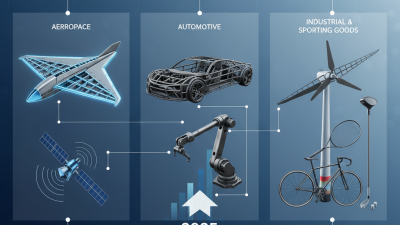
Pultruded carbon fiber bars have emerged as essential components across various industries. Their lightweight nature makes them ideal for applications where weight reduction is critical. For instance, in the aerospace sector, every gram counts. These bars provide significant strength without adding excess weight, improving fuel efficiency.
Moreover, the corrosion resistance of pultruded carbon fiber bars sets them apart. In industries like construction and marine, exposure to harsh conditions is common. These bars can withstand moisture, chemicals, and UV radiation. This durability leads to lower maintenance costs and longer lifespan compared to traditional materials.
However, the initial cost of carbon fiber products can be high. It's vital for businesses to assess long-term benefits. A careful evaluation can reveal that the investment often pays off through enhanced performance and reduced replacement needs. Understanding the balance between cost and durability is crucial for decision-makers.
Top 10 Benefits of Pultruded Carbon Fiber Bar for Global Buyers
| Benefit |
Description |
Industry Application |
| High Strength-to-Weight Ratio |
Carbon fiber bars provide superior strength while remaining lightweight, making them ideal for structural applications. |
Aerospace, Automotive |
| Corrosion Resistance |
The chemical properties of carbon fiber make it resistant to various environmental factors. |
Marine, Construction |
| Low Thermal Expansion |
Maintains dimensional stability across temperature variations, enhancing performance. |
Electronics, Aerospace |
| Design Flexibility |
Can be easily molded into various shapes for specialized applications. |
Sports Equipment, Robotics |
| Vibration Damping |
Effective at absorbing vibrations, increasing component longevity. |
Automotive, Industrial Machinery |
| Compatibility with Other Materials |
Can be easily combined with other materials for enhanced properties. |
Manufacturing, Aerospace |
| Excellent Fatigue Resistance |
Performs well under cyclic loads, making it suitable for dynamic applications. |
Sports Equipment, Vehicle Components |
| Aesthetic Appeal |
Modern look and feel, often preferred for designs requiring visual appeal. |
Consumer Products, Fashion |
| Sustainability |
Carbon fiber technology is advancing towards more sustainable production methods. |
Green Technology, Sustainability Initiatives |
| Cost Efficiency in the Long Run |
While initial costs are high, longevity and performance lead to lower lifetime costs. |
Construction, Industrial Applications |
Cost-Effectiveness of Using Pultruded Carbon Fiber Bars for Buyers
Pultruded carbon fiber bars offer significant cost-effectiveness for global buyers. Their lightweight nature leads to reduced shipping expenses. This is beneficial for companies looking to save on logistics. Additionally, these bars often require less material than traditional materials, which translates to lower production costs. When manufacturers optimize their materials, they boost profit margins effectively.
Maintenance costs are also lower. Unlike metal materials, carbon fiber bars resist corrosion, leading to fewer replacements over time. This durability is important for industries like construction and automotive. While pultruded bars are valuable, some users report that the initial investment can be higher. It's crucial to weigh short-term expenses against long-term savings.
Investing in pultruded carbon fiber requires careful consideration. Not all applications may benefit equally. Understanding your specific needs is vital. Buyers should conduct thorough research to ensure their choice aligns with long-term financial goals. Balancing quality and cost can make a significant difference.
Top 10 Benefits of Pultruded Carbon Fiber Bar for Global Buyers
Durability and Strength Features of Pultruded Carbon Fiber Bars
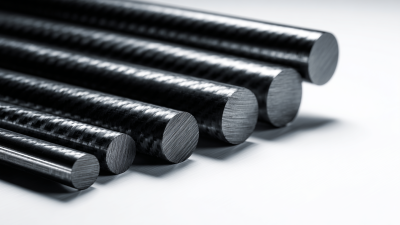
Pultruded carbon fiber bars offer remarkable durability and strength, making them an ideal choice for various applications. These composite materials are known for their high tensile strength, which can exceed 600 MPa. This makes them suitable for demanding environments, such as construction and automotive sectors. The lightweight nature of carbon fiber, combined with its impressive strength-to-weight ratio, allows for the design of structures that require resilience without the burden of excess weight.
In addition to strength, pultruded carbon fiber bars resist corrosion and environmental degradation. Reports indicate that carbon fiber components maintain their integrity even under harsh conditions. They can endure temperatures ranging from -40°C to 120°C, increasing their versatility. Many industries appreciate the longevity of these materials, often seeing lifespans that outlast traditional metal alternatives.
However, the initial cost of pultruded carbon fiber bars can be higher than other materials. This factor sometimes deters buyers from investing. Furthermore, the manufacturing process is complex, and not all producers adhere to the same quality standards. This inconsistency can lead to performance issues. Despite these challenges, the industry shows strong growth, reflecting growing confidence in the benefits of these advanced materials.
Environmental Impact and Sustainability of Pultruded Carbon Fiber Bars
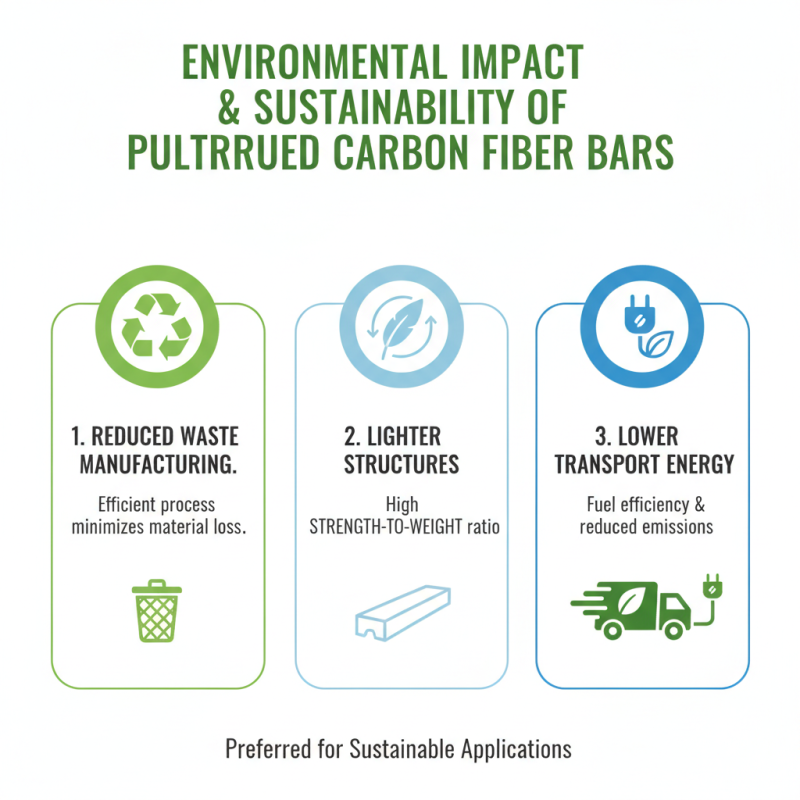
Pultruded carbon fiber bars present significant advantages in sustainability. Their manufacturing process reduces waste compared to traditional materials. The high strength-to-weight ratio allows for lighter structures, resulting in lower energy costs during transportation. This efficiency makes them a preferred choice for many applications, especially in industries focused on sustainability.
Moreover, these bars are highly durable and resistant to corrosion. This longevity means they do not need frequent replacement, which conserves resources. It’s essential to consider the life cycle of materials. While production may require specific energy inputs, the long-term benefits often outweigh these initial impacts.
Environmental challenges in production remain. Each step necessitates careful monitoring to minimize emissions and waste. Rethinking production methods can enhance overall sustainability. Continued innovation is vital. Designers and manufacturers must commit to best practices. Addressing potential drawbacks is crucial for future advancements in the industry.
Applications of Pultruded Carbon Fiber Bars in Modern Engineering
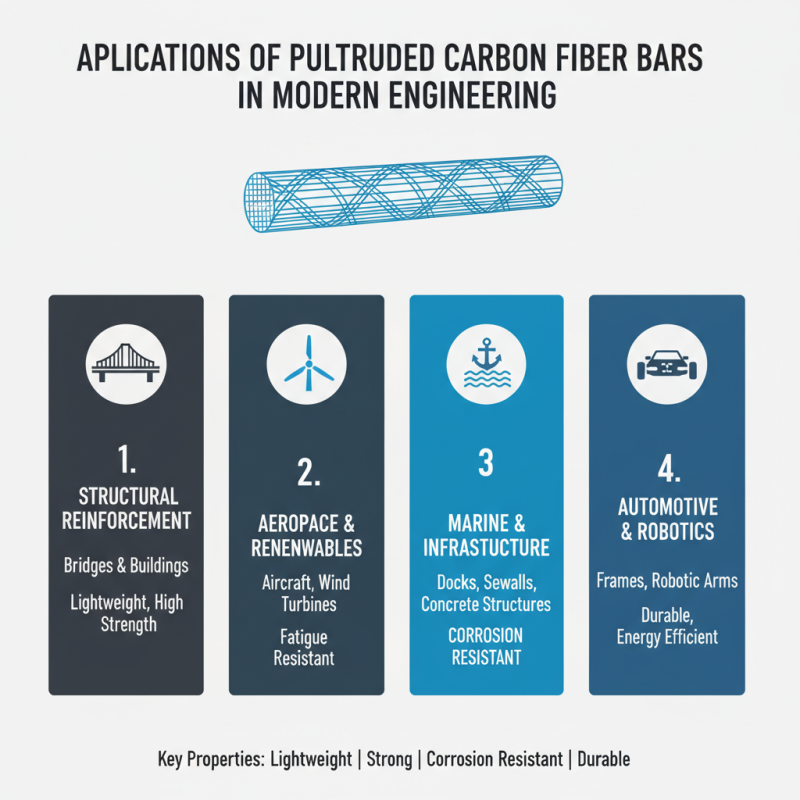
Pultruded carbon fiber bars have become a cornerstone in modern engineering applications. Their unique properties offer numerous advantages across multiple industries. These bars are lightweight yet incredibly strong, making them ideal for structural reinforcement. They resist corrosion, which is vital in construction and marine environments.
In the automotive sector, pultruded carbon fiber bars enhance vehicle performance. They reduce weight without sacrificing strength. This leads to improved fuel efficiency and better handling. Furthermore, aerospace industries utilize these bars to decrease overall aircraft weight, translating to increased fuel savings over long distances.
**Tip:** Consider the environment where these materials will be used. Understanding exposure conditions is essential for optimal performance.
As for the renewable energy sector, pultruded carbon fiber bars are used in wind turbine blades. Their stiffness and durability allow for longer blades that capture more wind energy. However, the production process can be resource-intensive. Engineers must weigh the benefits against environmental impacts. Evaluating lifecycle costs and sustainability is essential.
**Tip:** Always assess your specific application needs before choosing materials. Each project has unique requirements that can influence material selection.